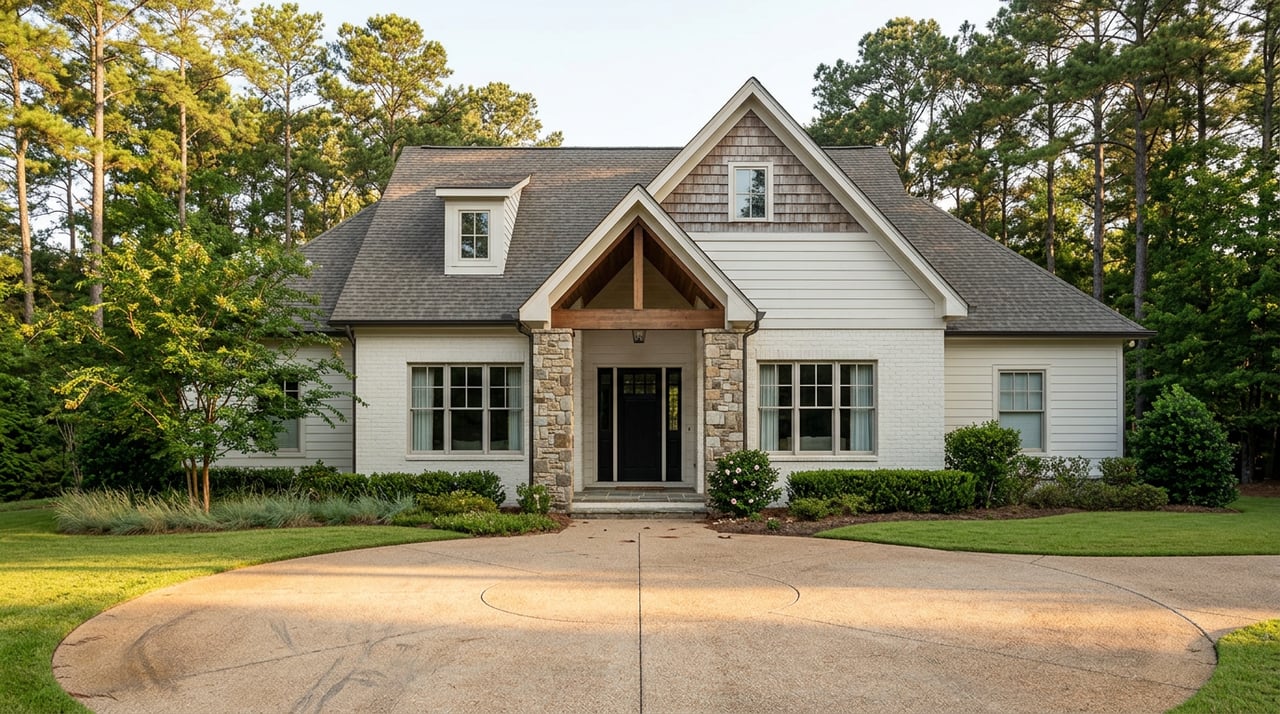
Pinehurst Club Transfer at Closing: What Buyers Need to Know
September 3, 2026
September 3, 2026
A listing agent writes "transferable Pinehurst Country Club membership" in the remarks and most buyers read it as a bonus, like a Sub-Zero fridge that stays with the house. Some of them are right. Some of them are about to misread a phrase that means something completely different depending on which gate the house sits behind.
Pinehurst's golf communities run on four separate membership systems, and they do not share a rulebook. Pinehurst Country Club deeds a membership right to a specific property, so buying the right house can save a new member tens of thousands of dollars over joining cold. The Country Club of North Carolina does not attach anything to the deed at all. It runs on sponsorship and residency, which means the house next to the CCNC gate conveys nothing more than eligibility to apply. Forest Creek and Pinewild sit somewhere in between, each with its own logic. If you assume the same rules apply everywhere in Pinehurst, you will either overpay for a phantom benefit or walk past a real one.
Pinehurst Country Club's own membership guidance draws a clear line between two paths into the club. If you want to join through a Village of Pinehurst property, the club sets a minimum initiation fee of $35,000. If the property sits in No. 7 or No. 9 and you want to establish a brand-new transferable Charter membership there, the fee to create that membership on the property is $60,000. That $25,000 gap has nothing to do with square footage, lot size, or finishes. It is the price difference between two membership doors in the same club, and it only shows up if you already know to ask which door a specific house opens.
Once a transferable membership exists on a property, the mechanics get more specific still. A new owner has 60 days from closing to submit a membership application and pay the applicable transfer fee, and the club has said Charter Members receive a 50% discount off the prevailing initiation fee of the category they select. Miss that window or skip the paperwork and you are not automatically a member just because you bought the house.
The club also allows a member to move a transferable membership from one property to another, but only within the Village of Pinehurst, and only under a strict timeline. If the new property already carries its own transferable membership, the two can be swapped at no cost. If it does not, the club allows a member to split off a new transferable membership for the new property, but the original property must be relisted for sale within 10 days of the new purchase. In either case, a transferable membership has to remain attached to the original property. That rule alone tells you something useful: the club treats the membership as tied to real estate, not to the person who happens to hold it, which is exactly why it can be marketed as a selling point in the first place.
Access also depends on category, not just price. Pinehurst is enrolling new members in the Social and Sports categories, but the Golf categories carry wait lists, so a buyer hoping to walk straight into full golf privileges may be joining a queue rather than a club. Buyers in No. 7 or No. 9 get a workaround: the club offers those neighborhoods three categories, Signature Golf, Signature Sport, and Signature Social, without the wait list that applies elsewhere. That is a real, quantifiable advantage of buying in those two neighborhoods specifically, and it rarely makes it into a listing description.
Buyers moving from a Pinehurst Country Club mindset into a CCNC-adjacent search often assume the same logic applies. It does not. The Country Club of North Carolina states plainly that membership is by invitation and requires the support of a minimum of four current club members. There is no deed-based transfer path here, no property-attached Charter designation, no clause about moving a membership between houses. A CCNC membership belongs to the person who was invited and sponsored, not to whatever address they happen to occupy.
CCNC also grades membership by where you actually live. Resident and Moore County memberships go to those whose principal residence sits inside the CCNC gates or elsewhere in Moore County, with full and unlimited access to every course and amenity. A separate North Carolina - Local tier serves residents of Randolph, Chatham, Lee, Harnett, Cumberland, Hoke, Scotland, Richmond, and Montgomery counties, with the same full access. Buyers whose primary residence is elsewhere in North Carolina fall into a different membership tier, and there is even a National - Local category for residents of two specific South Carolina counties, Chesterfield and Marlboro.
None of that is determined by which house you buy. A property inside the CCNC gates does not hand you a membership at closing. It makes you eligible to seek sponsorship, assuming you can find four current members willing to back you, and then to apply under whatever residency category actually fits your situation. For a buyer relocating from out of state who assumes proximity equals access, that gap between "living near the club" and "being in the club" can be the most expensive misunderstanding in the entire search.
Forest Creek Golf Club follows a version of CCNC's logic. Membership is by invitation, and a prospective member needs a current club sponsor, similar to the sponsorship structure at CCNC rather than the deeded transfer system at Pinehurst Country Club. Forest Creek does not publish its fee schedule publicly, which means a buyer cannot look up initiation costs the way they can compare Pinehurst's Village and No. 7/9 numbers side by side. The invitation itself, not the house, is the asset.
Pinewild introduces a different kind of confusion, one that has nothing to do with transfer rules and everything to do with what your monthly bill actually contains. Pinewild's property owners association and Pinewild Country Club are legally separate entities. The POA handles neighborhood governance, and the club handles its own membership and amenity access under its own categories, which include Full Golf, Club, and Leisure tiers. Paying your POA dues at a Pinewild address does not put you inside the club. Those are two different checks, written to two different organizations, for two different sets of privileges, and a buyer who budgets for one assuming it covers both will be short every month.
| Club | Transfer model | Who decides | What a buyer should verify |
|---|---|---|---|
| Pinehurst Country Club | Membership right attaches to specific deeded properties | Club approves transfer application within 60 days of closing | Village versus No. 7/9 initiation cost, whether the property already carries a transferable membership, wait list status by category |
| Country Club of North Carolina | Not property-based; invitation with sponsorship | Four current members must sponsor the applicant | Which residency tier applies, whether sponsors are realistically available |
| Forest Creek Golf Club | Not property-based; invitation with sponsorship | A current member sponsor | Fee schedule is not public, so request it directly from the club |
| Pinewild Country Club | POA and club are separate; club membership not automatic | POA governs the neighborhood; club governs its own membership | Whether monthly figures quoted to you include both POA dues and club dues |
Before you write an offer on any Pinehurst-area golf property, the sentence to ask about is not "does the house have a membership." It is "what does this club's process actually require of the next owner." Request the membership certificate or transfer paperwork from the seller, ask the listing agent to confirm which category and wait list status apply, and get written confirmation from the relevant membership office before you remove contingencies. Club terms change over time, so treat anything printed here as a starting point for a conversation with the club, not a substitute for one.
If a house near CCNC has a "club-eligible" label, does that mean I'm automatically approved? No. CCNC membership requires sponsorship from four current members and depends on where your principal residence is located. Proximity to the gates affects which residency tier you might eventually qualify for, but it does not grant membership on its own.
I'm buying a Pinehurst Country Club home in the Village without an existing transferable membership. What changes? You would be establishing membership fresh rather than transferring one, and the Village minimum initiation the club has stated is $35,000, compared to the $60,000 fee to create a new transferable Charter membership in No. 7 or No. 9.
Can I move a transferable Pinehurst Country Club membership if I buy a different house later? Only within the Village of Pinehurst, and only under specific conditions. If the new property already has a transferable membership, you can swap at no cost. If it does not, you can split off a new one, but the original property must go back on the market within 10 days of your new purchase.
Membership rules like these rarely show up in a portal description, which is exactly why they matter when you are comparing two golf-community homes that look identical on paper. If you are weighing a Pinehurst purchase or sale and want to understand what a specific property's club status actually means for your closing, Ross Laton has spent decades working these neighborhoods and can walk through the details with you. Let's Connect.
This article is general information, not legal, tax or financial advice. Consult a qualified professional about your situation.
Stay up to date on the latest real estate trends.

With deep roots in Seven Lakes and a passion for helping clients make confident real estate decisions, Ross Laton offers local insight, personalized service, and a seamless experience from start to finish.

SEVEN LAKES REAL ESTATE
103 Fawn Court West End, NC 27376 MON - SAT 8:00AM - 7:00PM SUN 1:00PM - 5:00PM